

What Is Lo-Fi Music? History, Elements & How to Make Lo-Fi Beats
Lo-fi music is everywhere — in study playlists, coffee shop ambience apps, and the ever-present YouTube streams of an animated girl studying at her desk. But what exactly is lo-fi music, and why does that deliberate imperfection feel so comforting?
In this guide you'll learn exactly what lo-fi music is, where it came from, what makes a lo-fi beat tick, and — most importantly — how to make lo-fi music yourself using AI tools like MemoTune's AI Song Maker, even if you've never touched a DAW in your life.
Key Takeaways
- Lo-fi music (low-fidelity) embraces imperfection: tape hiss, vinyl crackle, slightly off-beat drums.
- The genre traces its roots to 1980s Japanese city pop and DIY cassette culture, then exploded online through YouTube chill streams.
- The core recipe: BPM 60–90, jazzy chord progressions, warm vinyl noise, and spacious reverb.
- AI tools like MemoTune let anyone generate a complete lo-fi track in minutes — no instruments or studio needed.
What Is Lo-Fi Music?
Lo-fi — short for low-fidelity — is a music aesthetic defined by intentional sonic imperfections. Where traditional recording strives for crystal-clear, studio-polished sound, lo-fi deliberately preserves (or adds) artifacts like:
- Vinyl crackle & record surface noise — the warm static you hear on old LPs
- Tape hiss — the subtle white-noise layer from analog cassette playback
- Slight pitch wobble (wow & flutter) — from aging tape machines
- Muffled or "dusty" frequencies — rolling off high-end brightness
- Ambient background sounds — rain, coffee shop chatter, distant traffic
These imperfections create a paradoxically warm, intimate sound that listeners associate with comfort, focus, and nostalgia. Lo-fi music typically sits at 60–90 BPM, uses jazz-influenced chord voicings, and layers soft, looping instrumental arrangements over an ever-present bed of background texture.

Today, "lo-fi" has become shorthand for an entire mood and lifestyle aesthetic — not just a recording technique. You'll find it in:
- Study & focus playlists (the genre's biggest use case)
- Sleep and relaxation content
- Café background music
- Video game soundtracks
- Podcast intro music
Lo-Fi Music History: From Tokyo Cassette Tapes to YouTube Millions
Japanese City Pop & DIY Cassette Culture (1980s)
Lo-fi's lineage runs through multiple threads. In Japan, the late 1970s–1980s saw the rise of city pop — a genre blending Western jazz, funk, and soft rock with smooth, sophisticated production. Artists like Tatsuro Yamashita and Mariya Takeuchi created recordings with a warm, slightly hazy quality that would later be rediscovered and sampled by lo-fi producers worldwide.
Simultaneously, the global cassette tape DIY scene normalized imperfect home recordings. Bedroom musicians recorded directly onto cheap cassette decks, preserving all the hiss and limitations of analog tape. Rather than a bug, this became a badge of authenticity.
Hip-Hop's Influence and the Birth of "Chill Beats" (1990s–2000s)
Lo-fi hip-hop emerged when producers began sampling old jazz records, intentionally preserving the vinyl crackle rather than cleaning it out. Pioneers like J Dilla and Nujabes built entire sonic worlds from dusty samples, slightly swinging drum patterns, and warm, lo-fi textures. Their music felt handmade — imperfect in a way that connected deeply with listeners.
The phrase "lo-fi hip hop beats to study/relax to" was coined by YouTube channels in the early 2010s that began streaming these kinds of tracks continuously. The format found its audience fast.
The Lo-Fi Girl Era (2017–Present)
In 2017, a YouTube channel (now known as Lo-Fi Girl) launched a 24/7 live stream featuring a looping animation of a girl studying at her desk, paired with an endless stream of lo-fi beats. The stream amassed millions of concurrent listeners and introduced the genre to a global audience who had never thought of themselves as music fans — just people who needed background sound.
Today, lo-fi is a multi-billion-stream genre on Spotify, with dedicated playlists, labels, and an entire ecosystem of producers, visual artists, and content creators built around its distinctive aesthetic.

Key Elements of Lo-Fi Beats
Understanding what makes lo-fi music feel like lo-fi helps you produce it more intentionally. Here are the essential building blocks:
1. Tempo: BPM 60–90
Lo-fi lives in the slow-to-medium tempo range. Most tracks sit between 70–85 BPM — slow enough to feel relaxed, but with enough pulse to keep listeners engaged over long listening sessions. The slower tempo also makes the music less distracting, which is why it works so well as study or work music.
2. Jazzy Chord Progressions
Lo-fi borrows heavily from jazz harmony. Instead of simple major/minor triads, lo-fi producers use extended chords:
- Major 7 chords (Cmaj7, Fmaj7) — warm, sophisticated
- Minor 7 chords (Am7, Dm7) — melancholic and introspective
- Dominant 9 chords — adds tension and colour
- ii–V–I progressions — the backbone of jazz, also beloved in lo-fi
Common key choices: C major, F major, G major, A minor, D minor — keys that feel naturally warm and accessible.
3. Vinyl & Tape Texture
The signature sound of lo-fi is its noise floor — the layer of ambient texture beneath the music. Producers add:
- Vinyl record crackle samples — recorded from actual LPs
- Tape saturation — analog warmth from overdriving tape circuits
- Low-pass filtering — cutting high frequencies to simulate aged recordings
- Bitcrushing — reducing bit-depth for a gritty, digital-analog hybrid sound
4. Swinging, Humanized Drums
Lo-fi drums rarely sit perfectly on the grid. Producers use swing quantization (typically 55–65% swing) to give the beat a slightly lazy, human feel. Drum hits are often:
- Slightly off the beat (not snapped to perfect 16th-note grids)
- Layered with vinyl-sampled breakbeats
- Low in the mix — supportive, not dominant
5. Sampled or Live Instruments
Most lo-fi tracks feature at least one prominent melodic element, often:
- Jazz piano or electric piano (Rhodes, Wurlitzer)
- Acoustic or nylon-string guitar
- Upright or electric bass
- Ambient pads — soft, sustained synth tones
These are often pitched-down, slowed, and layered with effects to feel organic and "lived-in."
6. Atmosphere & Background Sounds
A defining lo-fi characteristic is the ambient environment woven into the track:
- Rain sounds — gentle rain against a window
- Coffee shop ambience — soft chatter, cups clinking
- Nature sounds — birds, wind, crickets (for night-lo-fi vibes)
- Room tone — the silence of a real space
These background textures transform the music from a recording into a place.

How to Make Lo-Fi Beats with AI
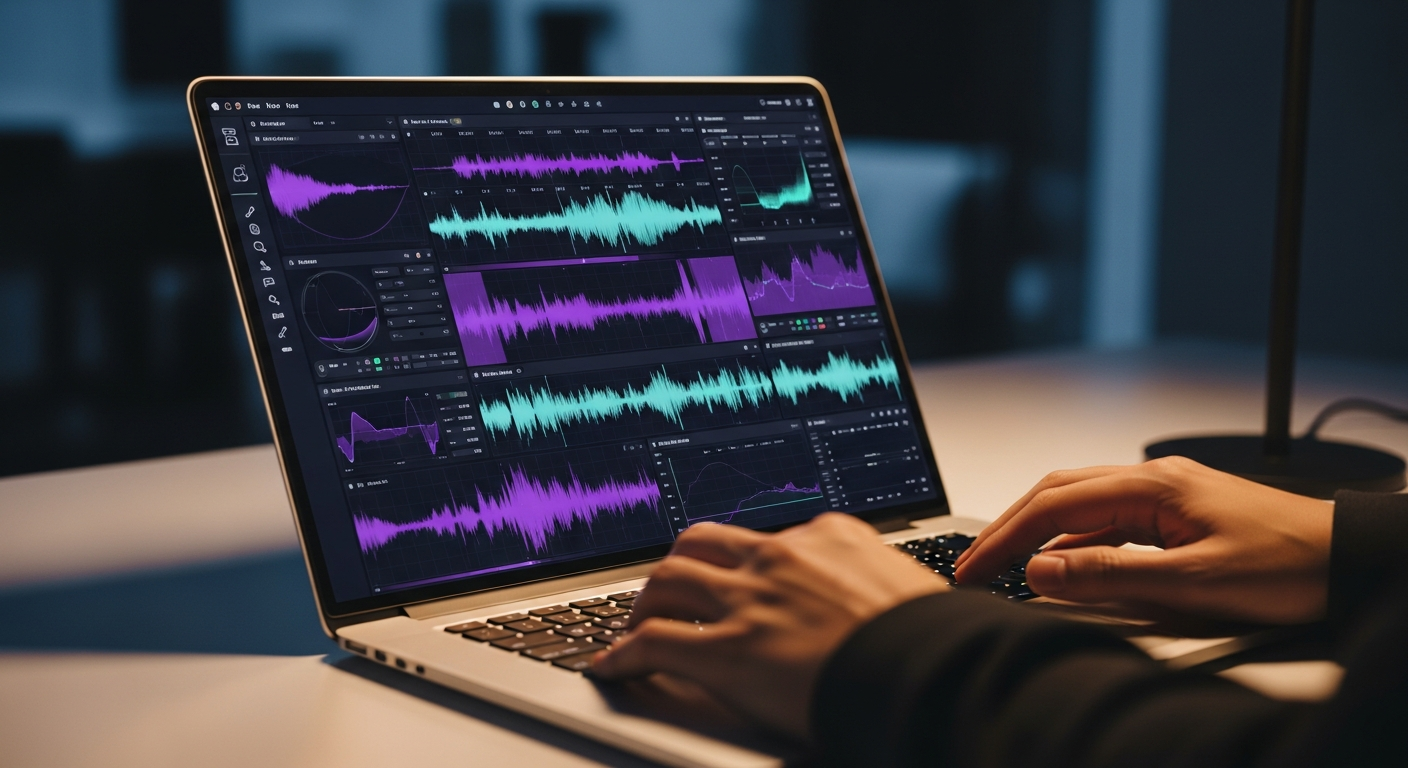
Traditionally, making lo-fi music required a DAW (Digital Audio Workstation), sample libraries, audio plugins, and hours of experimentation. Today, AI music generators have made it possible for anyone to create a complete lo-fi track in minutes.
Here's how to make lo-fi music using MemoTune:
Step 1: Choose Your Mood and Vibe
Before generating, decide on the feeling you want. Lo-fi isn't one single thing — there are sub-vibes:
- Study lo-fi — minimal, focus-friendly, very relaxed
- Rainy day lo-fi — more melancholic, slightly busier
- Chill evening lo-fi — warm, slightly jazzy, laid-back
- Nature lo-fi — outdoor ambience, birdsong, organic textures
Step 2: Describe Your Track in MemoTune
Open MemoTune's AI Song Maker and describe what you want. Be specific:
"A slow lo-fi hip hop track at 75 BPM with a warm jazz piano melody, vinyl crackle, light rain in the background, and soft swing drums. Melancholic and relaxing mood."
The more specific your description, the closer the AI gets to your vision on the first try.
Step 3: Select Lo-Fi Genre Parameters
MemoTune's interface lets you set:
- Genre: Lo-Fi Hip Hop / Chill Beats
- Tempo: 70–85 BPM
- Mood: Relaxed / Melancholic / Cozy
- Instruments: Piano, Guitar, Soft Pads
- Effects: Vinyl crackle, rain ambience
Step 4: Generate and Preview
Click generate and let the AI compose your track. Most generations take under 30 seconds. Listen to the preview — does it capture the right mood? If not, refine your description and try again.
Step 5: Download and Use Your Track
Once you're happy with the result, download your lo-fi beat as an MP3 or WAV file. You can use it for:
- Personal study sessions
- YouTube videos and streams
- Podcast background music
- Social media content
No attribution required — your AI-generated lo-fi beat is ready to use.

Tips for Better Lo-Fi Music
Whether you're using AI or a traditional DAW, these tips will elevate your lo-fi tracks:
1. Less Is More
Lo-fi is defined by restraint. Resist the urge to add too many elements. A piano melody, a simple chord pad, soft drums, and vinyl crackle is often all you need. Space is an instrument in lo-fi.
2. Pitch Your Samples Down
Slightly pitching down (1-2 semitones) any sampled elements instantly adds a warm, nostalgic quality. It emulates the speed variation of aging vinyl records.
3. Use Real Background Sounds
Layer in actual recorded ambience — rain recorded on your phone, a coffee shop recording, or free ambience tracks from Freesound.org. Real sounds feel more convincing than synthetic ones.
4. Embrace Imperfection
Don't quantize everything to perfection. A slightly early or late note hit, a subtle timing variation — these human imperfections are what give lo-fi its soul.
5. Loop-Friendly Arrangements
Design your lo-fi track to loop seamlessly. Most lo-fi listeners play tracks for 30–60 minutes straight. Make sure your track doesn't have an abrupt or jarring loop point.
6. Keep the Mix Warm, Not Loud
Lo-fi isn't mastered to loudness. A gentle, warm master with soft limiting — not aggressive compression — fits the genre. Aim for -16 to -14 LUFS integrated loudness.
Frequently Asked Questions
Q: What does "lo-fi" stand for in music? Lo-fi stands for low-fidelity — a term that originally described audio recordings with technical imperfections (hiss, crackle, distortion). In modern music, it's used as an aesthetic term for music that intentionally sounds warm, nostalgic, and imperfect.
Q: Is lo-fi music the same as ambient music? Not quite. Lo-fi music typically has a rhythmic element (drum beats, percussion) and melodic content, while ambient music can be purely textural with no rhythmic structure. Lo-fi does borrow heavily from ambient music's focus on mood and atmosphere, but it retains a hip-hop or jazz rhythmic foundation.
Q: What BPM is lo-fi music? Lo-fi music typically ranges from 60–90 BPM, with the most common range being 70–80 BPM. This slower tempo is what makes lo-fi ideal for studying, relaxing, and focusing — it's slow enough to not be distracting, but has enough pulse to feel musical.
Q: Can I use AI to make lo-fi music? Absolutely. AI music generators like MemoTune can create complete lo-fi beats from a text description in under a minute. You can specify the BPM, mood, instruments, and atmosphere, and the AI handles composition, arrangement, and mixing.
Q: What chords are used in lo-fi music? Lo-fi music borrows heavily from jazz harmony and commonly uses major 7th chords (Cmaj7, Fmaj7), minor 7th chords (Am7, Dm7), suspended chords (Csus2), and dominant 9th chords. These extended voicings create the warm, sophisticated sound that defines the genre.
Q: Is lo-fi music copyrighted? Individual lo-fi tracks are copyrighted by their creators. However, AI-generated lo-fi music (created with tools like MemoTune) belongs to you — you can use it freely for personal projects, YouTube videos, or streams without copyright concerns.
Q: Why is lo-fi music good for studying? Research suggests that low-stimulation, repetitive background music can improve focus by masking distracting environmental noise without engaging the language-processing parts of the brain. Lo-fi's slow tempo, absence of lyrics, and predictable loops make it ideal study music.
Conclusion: Start Making Lo-Fi Music Today
Lo-fi music's appeal is timeless — it's the sonic equivalent of a cozy afternoon, a cup of tea, and a rainy window. Whether you're drawn to its nostalgic Japanese city pop roots, its DIY cassette tape ethos, or simply its ability to create focus and calm, lo-fi is a genre that rewards both listening and creating.
The barrier to making lo-fi music has never been lower. You don't need expensive gear, years of music theory knowledge, or a professional studio. With AI tools like MemoTune, you can describe the mood you're after and get a fully produced lo-fi beat in seconds.
Ready to make your own lo-fi beats? Try MemoTune's AI Song Maker free — no music skills required. Generate your first track in under a minute and experience what it feels like to create music from nothing but an idea.
Table of Contents
Author

Categories
Tags
More Posts

How to Create Songs Online: Step-by-Step Guide for Beginners (2026)
Learn how to create songs online step by step. This beginner guide covers lyrics, music styles, AI vocals, and free tools to make your first song today.

How to Make a Rap Song: History, Structure & AI Guide
Learn how to make a rap song from scratch — covering rap history, beat structure, music theory, and how to use AI to generate your own rap tracks instantly.

How to Turn Lyrics into a Song with AI (+ 12 Style Templates)
Learn how to transform your lyrics into a complete song using AI music generation, plus 12 copy-paste style templates for different genres.
Newsletter
Join the community
Subscribe to our newsletter for the latest news and updates